BizBeat

-

China moves swiftly to stabilize markets amid global financial turbulence
In a time of heightened uncertainty in the global trade environment and dramatic fluctuations in international financial markets, the timely and decisive action of China's state capital will effectively guide market expectations and mitigate the impact of external shocks.
2025-04-09
-

China to work with EU to promote sound, steady development of relations -- Premier Li
Protectionism leads nowhere, and only openness and cooperation represent the right path for mankind.
2025-04-09
-

Practical progress in bilateral ties urged
The talks came close on the heels of the meeting between President Xi Jinping and Indian Prime Minister Narendra Modi in Kazan, Russia, held less than a month ago. The meeting was described by Wang as a restart of bilateral ties.
2024-11-21
-
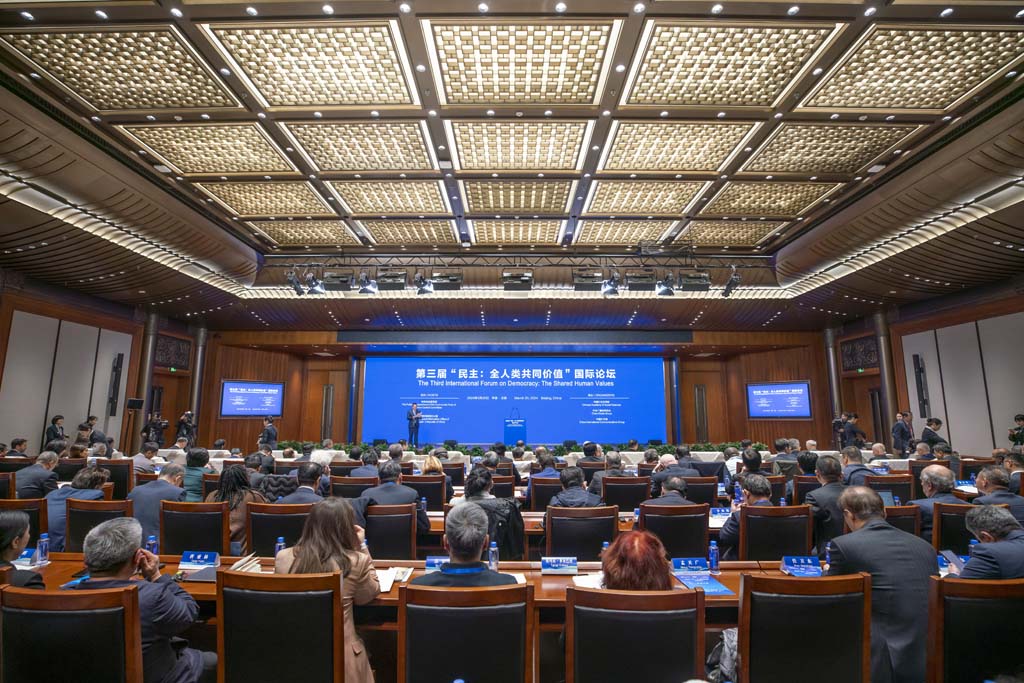
Beijing Hosts the Third International Forum on Democracy
The third International Forum on Democracy: The Shared Human Values, kicked off in Beijing on Wednesday. Over 200 guests from various countries, regions, and international organizations engaged in discussions to explore the essence of democracy and paths for mutual learning.
2024-03-20


By Liu Chang
Approaching the Stone Forest Scenic Area in Kunming City, Yunnan Province, Sayema Haque Bidisha literally dropped her jaw at the spectacular UNESCO World Heritage Site. The site features a vast maze of dramatic limestone karst pillars formed over 270 million years ago.
The “lifetime experience” Bidisha described was part of exchange activities for the 2025 “Chinese Bridge” Bangladeshi Education Delegation in China. The exchange, spanning March 17 to 21, 2025, also marked Bidisha’s first trip to China.
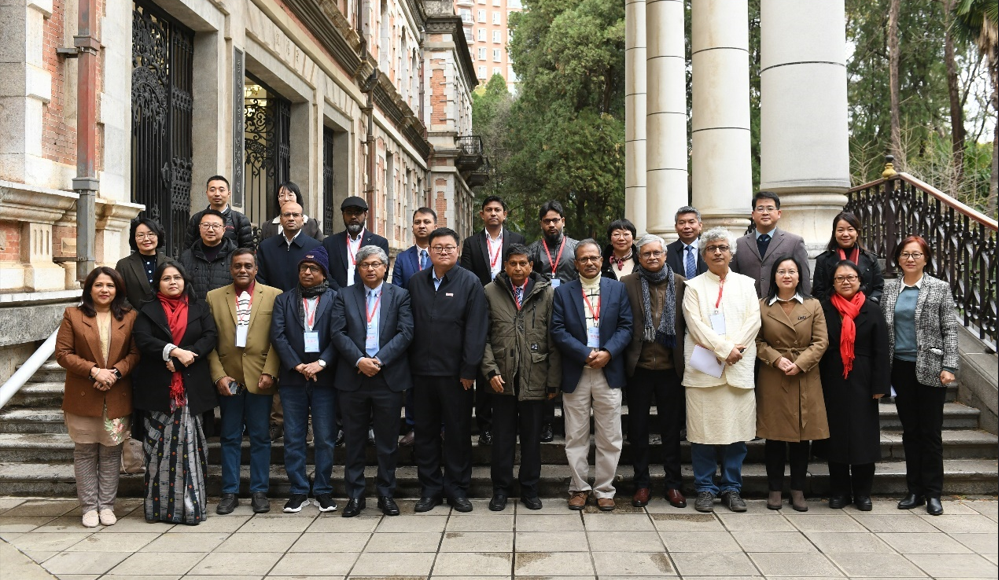
A group photo featuring Sayema Haque Bidisha (second left, first row) and other delegates from the 2025 “Chinese Bridge” Bangladeshi Education Delegation, taken in Kunming City, Yunnan Province, in March 2025. (Photo courtesy of Sayema Haque Bidisha)
“I was impressed by a very well-structured educational system including degree and non-degree education, a lively mode of teaching and classroom interaction, and a proper supporting mechanism to connect graduates and industries,” said Bidisha, professor of the Department of Economics and former pro-vice chancellor, University of Dhaka.
“Interestingly, I was also very surprised that some local students study the Bengali language, which can facilitate some service trade,” she added. “For example, my uncles would love to come to Yunnan for health care or medical treatment.”
Planning-Led Governance
Issues such as the labor market and youth employment were the main topics of an exchange activity conducted at the Shanghai Institutes for International Studies (SIIS) on September 15, 2026. Bidisha came back to China under a fellowship program organized by the Centre for China Studies at the University of Dhaka.
The center, established in partnership with institutions like the SIIS and the Academy of Contemporary China and World Studies in March 2024, is a collaborative research institution promoting bilateral academic exchange, joint research, and policy dialogue between Bangladesh and China.
This year marks the beginning of China’s 15th Five-Year Plan period (2026–2030), with key highlights including high-quality growth, technology upgrades, and green energy. The concept of “Five-Year Plan” is familiar to Bidisha.

At the 2026 CMG Spring Festival Gala, robots from Unitree Robotics perform martial arts alongside young performers, integrating Chinese culture with technology, February 16, 2026. (Photo from VCG)
Bangladesh guides its national economic development and structural reforms through five-year plans managed by the General Economics Division of the Planning Commission. With the first plan launched in 1973, a new Five-Year Strategic Framework for Reform and Development (July 2026–June 2031) is now under implementation utilizing a 3R Strategy (Recovery, Restoration, and Reconstruction) to target a US$1 trillion economy by 2034.
A few months after the framework release, Bidisha served as a consultant in roundtable discussions evaluating its feasibility organized by the Planning Commission.
“The three Rs aim to repair problems in the banking sector and lay a foundation for growth by targeting immediate economic stabilization and recovery, restoring institutional and economic health, and pursuing long-term rebuilding, poverty reduction, and accelerating sustainable development separately,” Bidisha said.
Contrasting China’s “hand-in-hand” planning, implementation, and oversight of its planning-led governance, the Bangladeshi approach is perceived to have more of “a disconnect,” according to Bidisha. Authors of planning documents receive recognition, while implementation teams remain undersupported and largely invisible, creating a culture of paperwork over practical execution, Bidisha explained. She added that government bodies and line ministries operate in isolated silos without robust central oversight, causing poor inter-ministerial coordination during execution.
Food for Thought
About 52 dependents (children and seniors) rely on every 100 working-age people in Bangladesh. The country’s total age dependency ratio was approximately 52.2 percent in 2025, according to data compiled from the World Bank.
Alongside “a relatively young bulge of people” and “emerging aging issues,” Bidisha attributed the dependency ratio to several socioeconomic pressures. Low labor force participation among certain groups, such as women, and high youth unemployment and underemployment has left many individuals within the statistical “working age” not actively earning, which increases the effective economic burden.
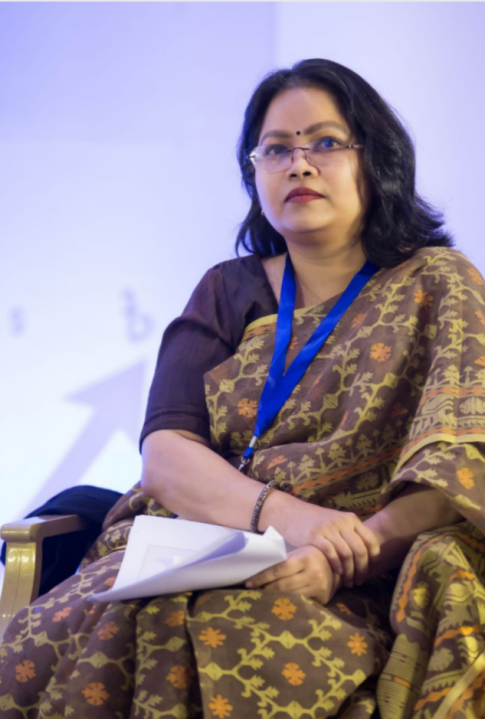
Sayema Haque Bidisha presents her research findings from the empirical study “Gender Gap in Financial Inclusion in Bangladesh,” funded by the Bill & Melinda Gates Foundation. (Photo courtesy of Sayema Haque Bidisha)
“For example, because of automation, the proportion of women in the garment industry has been reduced,” said Bidisha, also coauthor of a book chapter “Women Empowerment in Bangladesh Towards 2030: Trends, Challenges, and Opportunities,” published in 2025. “Financial empowerment is not everything, but it is important, and some narratives have to be changed.”
In China, a supervision model has been developed to protect women’s rights in the labor market. It targets discriminatory expressions such as “male priority” and “priority for married candidates with children” and monitors recruitment information on relevant platforms.
The Digital Mulan initiative has also been launched to provide AI training for women in rural areas of China. Many of these women, who once stayed home to raise children, till the land, or do odd jobs, have received training and become AI data annotators and AI trainers. One child was quoted as saying, “My mom teaches robots!”
China also faces employment pressure with 12.7 million new college graduates this year. In July 2026, the central government launched a nationwide employment support campaign running from July through December to provide career counseling, job matching, vocational training, and internship opportunities for college graduates and other young jobseekers.
Balancing Bangladesh’s economic growth and sustainability is another of Bidisha’s research interests. In 2023, a study she led was published by the South Asian Network on Economic Modeling to evaluate the financial and strategic investment requirements for Bangladesh’s transition to clean and renewable energy by 2041. The research outlined distinct pathways for the power sector based on differing policy and capacity ambitions. For instance, to achieve a near-complete renewable transition, an estimated investment of US$75–95 billion is needed to target aggressive decarbonization excluding baseline thermal baseload constraints.
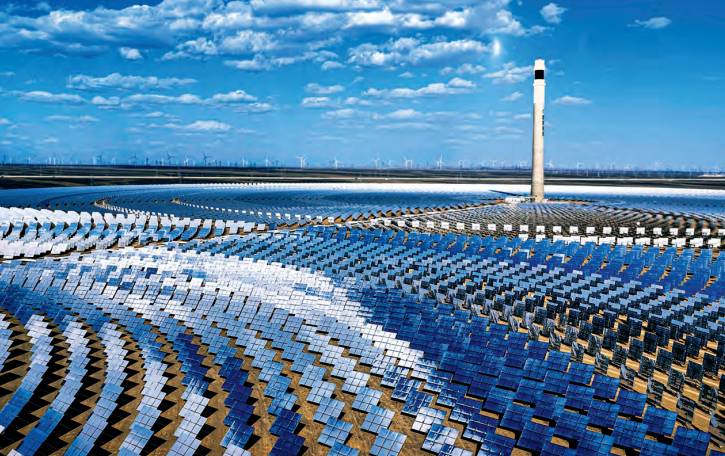
The Three Gorges Hengji Nengmai Guazhou 700,000-kilowatt “Solar Thermal Energy Storage+” project features the world’s first “Dual-Tower Single-Machine” solar thermal molten salt energy storage power station. It provides stable clean electricity output, supporting China’s green and low-carbon energy transformation.
As per CEIC Data, a global provider of macroeconomic and financial statistics, Bangladesh emitted about 134.12 million tonnes of CO₂ equivalent in 2025, continuing an upward trend driven by energy and industrial growth. Under the Renewable Energy Policy 2025, the country has set a target to generate at least 20 percent of its total electricity from renewable sources by 2030 and 30 percent by 2040 to curb dependence on imported fuels and prioritize renewable energy to meet growing demand.
In a national budget announced in June 2026, the Bangladeshi government waived tariffs on the import of electric vehicles (EVs) such as buses and trucks between July 1, 2026, and June 2030, while increasing tariffs on fossil fuel-powered vehicles.
“Considering the steep prices of liquefied natural gas because of conflicts in the Middle East, there is a bit of trade-off between electricity generated for industry and for EVs,” Bidisha said while showing interest in learning China’s experience. “Solar energy could be a good alternative considering that Bangladesh is a tropical country that receives abundant sunshine year-round.”
China’s installed solar capacity overtook coal-fired capacity for the first time by the end of July this year, making solar the country’s largest power source by installed capacity, according to data released in September by the National Energy Administration. By the end of July, China’s installed solar capacity had reached 1.28 billion kilowatts, roughly equal to the combined capacity of 57 Three Gorges Dams, the world’s largest hydroelectric power station by installed capacity, located on the Yangtze River in Yichang City, Hubei Province.
Patient Capital
For Tania Islam, a Bangladeshi exhibitor, the 10th China-South Asia Expo, held this June in Kunming City, Yunnan Province, featured Bangladesh shining as the Theme Country and offered opportunities to observe the market and ponder future partnerships with Chinese counterparts.

Tania Islam, a Bangladeshi exhibitor, displays products at the Kunming Dianchi International Convention and Exhibition Center in Kunming City, Yunnan Province, June 12, 2026. The 10th China-South Asia Expo took place at the center from June 11 to 16, 2026. (Photo by Liu Chang/China Pictorial)
China’s commitment to offering duty-free, quota-free access to Bangladeshi products, which runs from December 1, 2024 to the end of 2028, marked a promising sign for the trade relationship. For more than a decade, China has been Bangladesh’s largest trading partner with the bilateral goods trade hovering around US$24.1 billion in 2025, and Bangladesh is China’s second-largest trading partner in South Asia.
For Bidisha, the relationship can be promoted even further through China’s foreign direct investment (FDI) to Bangladesh. “Infrastructure projects aside, cost-effective production like electronics and service-related sectors like education are also potential investments,” she said.
China became Bangladesh’s second-largest source of net FDI in 2025, accounting for more than 18 percent of total inflow, according to Bangladesh Bank data.
As per the Chinese Enterprises Association in Bangladesh, the number of its registered members has increased from just dozens initially to more than 290 at present, covering trade, investment, infrastructure construction, communication technology, finance, shipping, energy, logistics, and garments.
“সম্পর্ক (pronounced shomporko) means ‘relationship’ in Bengali,” Bidisha smiled when asked to teach a Bengali word during her interview with China Pictorial. “It can refer to the relationship between you and me, a teacher-student relationship, or friendship between Bangladesh and China.”