Marching Through Fire: The Untold Human Stories of the Long March

-
China moves swiftly to stabilize markets amid global financial turbulence
In a time of heightened uncertainty in the global trade environment and dramatic fluctuations in international financial markets, the timely and decisive action of China's state capital will effectively guide market expectations and mitigate the impact of external shocks.
2025-04-09
-

China to work with EU to promote sound, steady development of relations -- Premier Li
Protectionism leads nowhere, and only openness and cooperation represent the right path for mankind.
2025-04-09
-

Practical progress in bilateral ties urged
The talks came close on the heels of the meeting between President Xi Jinping and Indian Prime Minister Narendra Modi in Kazan, Russia, held less than a month ago. The meeting was described by Wang as a restart of bilateral ties.
2024-11-21
-
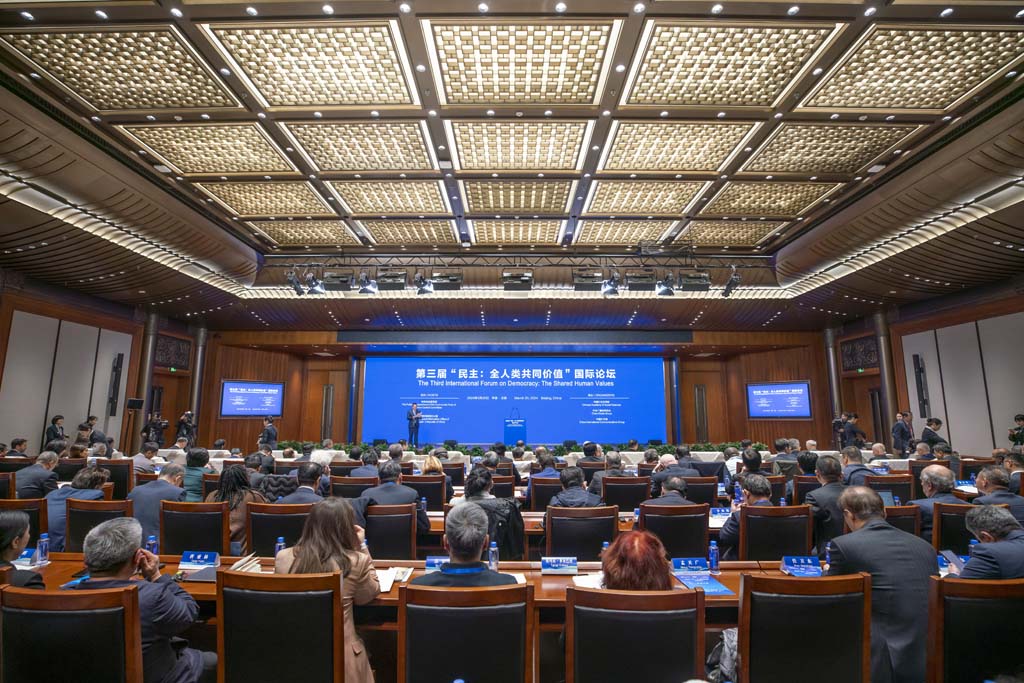
Beijing Hosts the Third International Forum on Democracy
The third International Forum on Democracy: The Shared Human Values, kicked off in Beijing on Wednesday. Over 200 guests from various countries, regions, and international organizations engaged in discussions to explore the essence of democracy and paths for mutual learning.
2024-03-20


By Zafar Uddin Mahmood
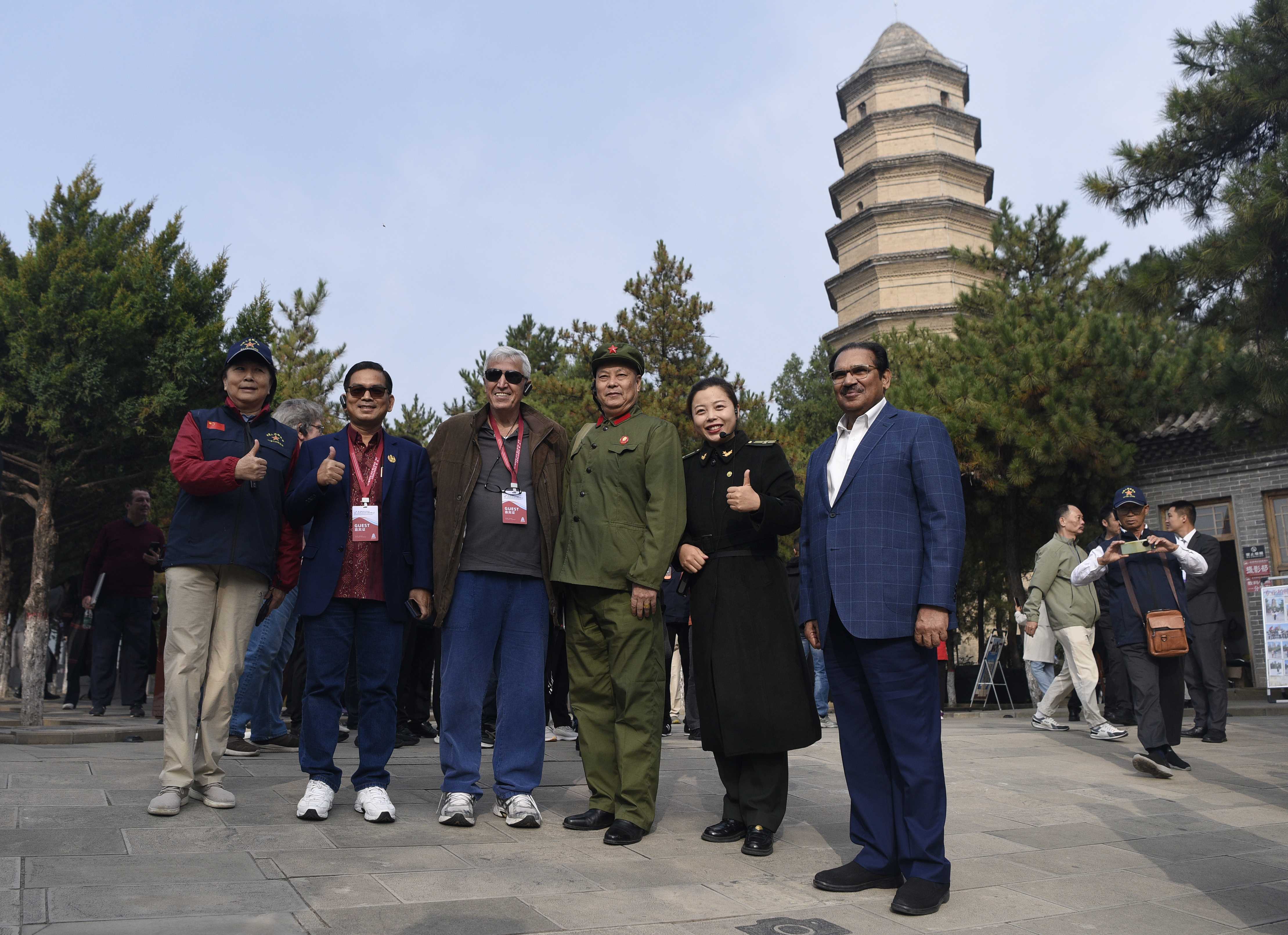
Zafar Uddin Mahmood (first right) in a group photo with other visitors during his trip to Yan’an, Shaanxi Province, October 16, 2024. (Photo courtesy of the author)
As China commemorates the 90th anniversary of the victory of the Red Army’s Long March, my memory has been returning to two places that have left a particularly deep impression on me: Zunyi in Guizhou Province and Yan’an in Shaanxi Province. I visited both places, toured their revolutionary sites and museums, and watched many films and documentaries depicting the extraordinary journey of the Red Army. Yet, with the passage of time, the most vivid thing in my memory has been not so much the scale of the military achievement as the deeply human story behind it — the courage, suffering, and sacrifice of tens of thousands of ordinary soldiers whose names have largely disappeared from the historical record.
Lasting from 1934 to 1936, the Long March was a legendary military maneuver of the 20th century. The Red Army covered vast distances over mountains, rivers, grasslands and some of the most difficult terrain in China. After the Central Red Army reached northern Shaanxi in October 1935, the three main Red Army forces converged in October 1936, bringing the Long March to a victorious close. In January 1937, the Central Committee of the Communist Party of China (CPC) relocated to Yan’an, which then became the center of the Chinese revolution.
For me, however, the Long March takes on meaning when it is measured by more than kilometers, battles, or military maneuvers. Its deeper significance is to be found in the relationship between the soldiers and the ordinary people among whom they stayed and whose villages they passed through.
Beyond the Battlefield: The People’s Support
My visits to Zunyi gave me a particularly strong sense of this history. The Zunyi Meeting of January 1935 is regarded as a life-and-death turning point in the Party’s history. It established Mao Zedong’s leading position in the CPC Central Committee and the Red Army. Yet standing there, surrounded by reminders of those difficult years, I found myself thinking more about the tens of thousands of soldiers who carried on the march afterward.
They were, for the most part, unknown soldiers. They did not ask for monuments to be raised in their honor. Many would never return home to their families. Some fell in battle. Others died from exhaustion, hunger, disease, exposure, or the sheer physical strain of the journey. Their individual stories are often missing from history books. Yet without their endurance and sacrifice, the larger historical story could never have been written.
I have been especially struck by the relationship between the Red Army and rural population. The soldiers were moving through areas where villagers were already living in great hardship. Their confidence could not be won by military strength alone. It depended on conduct: how soldiers treated villagers, how they respected their property, how they behaved when staying in villagers’ homes, and how they responded to ordinary people’s needs.
This aspect of the Long March has stayed with me across the many films and documentaries I have watched. Again and again, I saw images of soldiers sharing the little they had, helping villagers, and respecting villagers’ homes, winning the trust and support of the people through strict discipline and practical action.
The image that emerges is therefore more than that of an army moving from one place to another. It is the image of an army seeking to build relationships with the people. The principle of maintaining close ties with ordinary people subsequently became an important part of the revolutionary tradition associated with the Red Army and, in later years, with the People’s Liberation Army.
My visit to Yan’an deepened this reflection. Yan’an was not simply a place linked to the Long March. It later became the seat of the CPC Central Committee and the center of the revolutionary movement during another period of extraordinary hardship. The surrounding landscape, the cave dwellings, and the simple conditions in which revolutionary leaders and soldiers lived help modern visitors imagine the material hardships of that era.
Remembering the Unsung Heroes
Yet perhaps the most important lesson of the Long March is to remember those who can no longer speak for themselves.
When commemorating great historical events, there is a natural tendency to remember famous leaders, major meetings, and decisive battles. But history is also made up of people whose names are unknown: the young soldier carrying a wounded comrade; the peasant woman giving food to exhausted troops; the messenger crossing a dangerous river; the porter carrying supplies through the mountains; and the soldier who fell and was never named. These people formed the human foundation of the Long March.
There is something particularly moving about the way in which China has developed a continuing tradition of honoring such people. The Monument to the People’s Heroes at Tian’anmen Square in Beijing stands as a permanent national reminder that those who gave their lives should not disappear from the nation’s memory.
For me, this tradition carries a profound message: A nation does not truly forget those who gave everything for its future simply because their names are unknown. A name unrecorded by history does not diminish the worth of a sacrifice. There is, indeed, something especially noble about those who endured hardship without knowing whether history would ever remember them.
Ninety years on, my thoughts return to these unsung heroes. They marched without knowing what history would eventually say of them. Many gave everything, selflessly, to their ideals and convictions, sustained by the knowledge that they served a cause greater than themselves.
Having spent many years studying, living, and working in China, I have been privileged to witness how places once associated with extreme hardship have been transformed. Visiting Zunyi and Yan’an today, one finds modern cities and thriving communities. Yet beneath that modernity lies a powerful historical memory.
For me, the Long March is therefore more than a story of military endurance. It is a story of faith, sacrifice, discipline, human solidarity, and the relationship between soldiers and the people. Monuments to the Long March may honor the famous, but its spirit belongs as much to the unknown soldiers and ordinary villagers whose sacrifices helped make the journey possible.
As we commemorate the 90th anniversary of the victory of the Red Army’s Long March, I believe the greatest tribute we can pay is to remember not only the names history has preserved but also the countless ordinary men and women whose names history may never record.
They marched into history as unknown soldiers. They remain in our memory as heroes.
The author is the founding president of the Understanding China Forum in Pakistan.