Laojun Mountain: Where Heaven and Earth Embrace

-
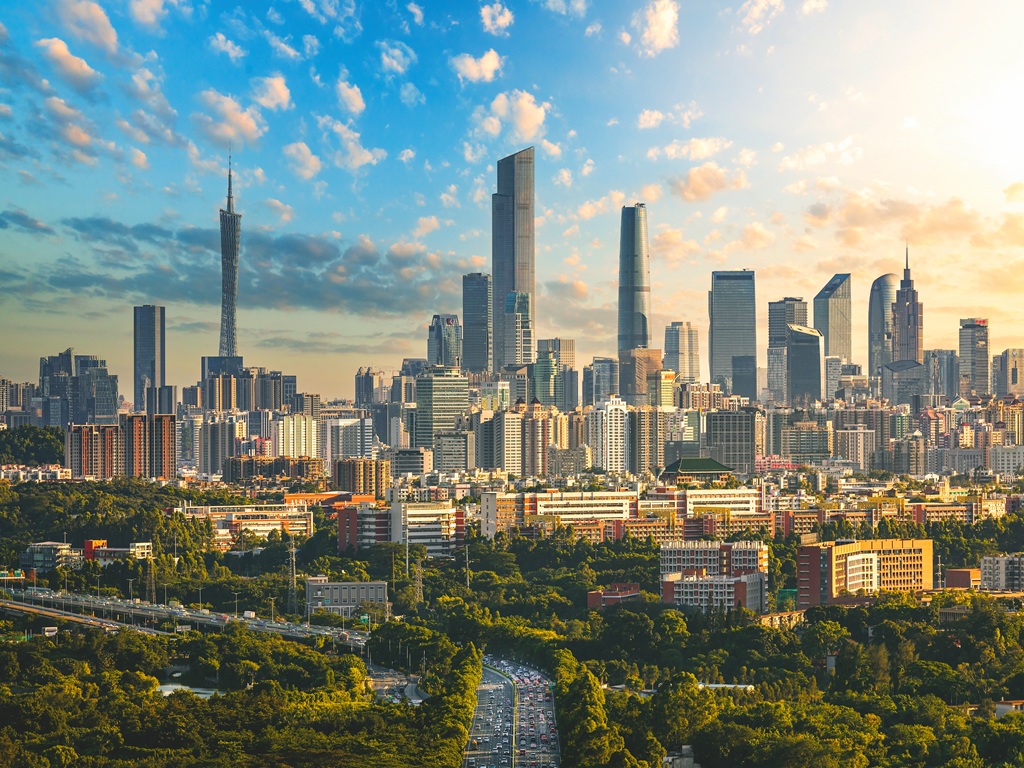
China moves swiftly to stabilize markets amid global financial turbulence
In a time of heightened uncertainty in the global trade environment and dramatic fluctuations in international financial markets, the timely and decisive action of China's state capital will effectively guide market expectations and mitigate the impact of external shocks.
2025-04-09
-

China to work with EU to promote sound, steady development of relations -- Premier Li
Protectionism leads nowhere, and only openness and cooperation represent the right path for mankind.
2025-04-09
-

Practical progress in bilateral ties urged
The talks came close on the heels of the meeting between President Xi Jinping and Indian Prime Minister Narendra Modi in Kazan, Russia, held less than a month ago. The meeting was described by Wang as a restart of bilateral ties.
2024-11-21
-
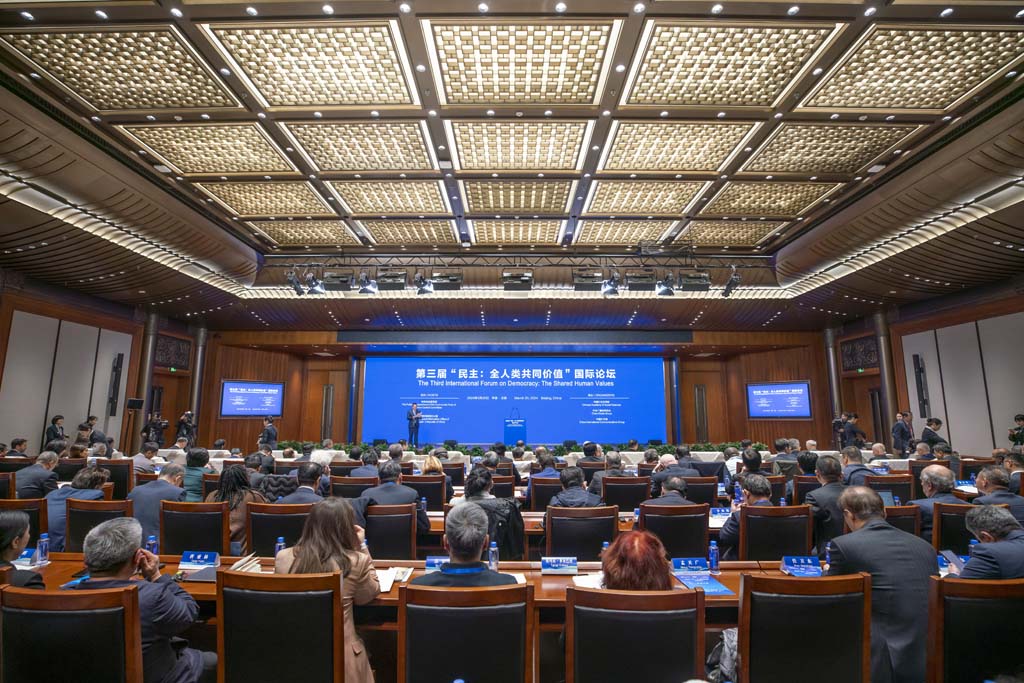
Beijing Hosts the Third International Forum on Democracy
The third International Forum on Democracy: The Shared Human Values, kicked off in Beijing on Wednesday. Over 200 guests from various countries, regions, and international organizations engaged in discussions to explore the essence of democracy and paths for mutual learning.
2024-03-20


Text by Wang Shuya
Photos by Shi Baoxia unless otherwise credited

An incredible sight on Laojun Mountain in Luanchuan County, Luoyang. (Photo courtesy of Luoyang Daily)
Nestled in the heart of central China’s Henan Province, Laojun Mountain in eastern Luanchuan County, Luoyang City, rises like a sacred brushstroke against the sky—a place where mist-clad peaks whisper ancient secrets and Taoist philosophy breathes through every stone. Standing over 2,200 meters tall, it is the highest peak of the Funiu Mountains. The mountain is celebrated for its rich cultural heritage as a significant Taoist site, inviting travelers to step into a living canvas of nature’s grandeur and humanity’s spiritual quest.
Physical Poetry
A tour of Laojun Mountain appears like listening to a symphony of geological wonders. Its quartzite peaks, forged over a billion years ago, erupt from the ground in jagged formations resembling petrified waterfalls. These “granite sea forests” transform in the light: At dawn, they emerge as dark silhouettes against cascading clouds; by midday, sunlight reveals their rose-gold veins; at sunset, the entire range glows like smoldering embers.
The mountain’s microclimates create ethereal dreamscapes. Cloud oceans regularly submerge the valleys, leaving only the highest peaks visible like islands in a white sea. Winter transforms the cliffs into crystalline sculptures, while autumn sets the maple forests ablaze. The plank path clinging to vertical cliffs offers more than adrenaline—it frames panoramic views where layered ridges recede into infinity, evoking classical Chinese landscape paintings.
Philosophy Carved in Stone
Named after Laozi, the founding sage of Taoism who is said to have retreated there to write the Tao Te Ching, or The Classic of the Way and Virtue, Laojun Mountain transcends physical beauty as a meditation on harmony between humans and the cosmos.
Its layout mirrors Taoist cosmology: Winding paths reflect Taoism’s meandering flow, and Taoist buildings like Golden Hall, Jade Emperor Peak, and Treasure Pavilion crown summits, forming a celestial triad representing Taoism’s highest deities. At sunrise and sunset, the golden sunlight bathing the ancient buildings and cliffs crafts mystical views.

Laojun Mountain transcends physical beauty as a meditation on harmony between humans and the cosmos.
At dawn, Taoist monks practice qigong (meditation with body posturing and breathing exercises) amid pine forests, their movements syncing with the mountain’s rhythms, while temple bells mingle with birdsong.
Nearby, the Natural Rocks Calligraphy Garden etches Laozi’s teachings into boulders, merging text with terrain. One inscription reads: “The Tao that can be spoken is not the eternal Tao”—a reminder of Taoist philosophy’s inseparability from the natural world.
Echoes from the Past
Human interaction with this mountain spans epochs. One legend claims Laozi’s alchemical furnace is hidden near the summit, where he achieved immortality. Another tells of Emperor Gaozong of the Tang Dynasty (618-907), allegedly dreaming of golden light radiating from the mountain and interpreting it as divine endorsement of his reign—leading to grand temple expansions. Some stories aren’t mere folklore but living history: Local villagers maintain oral traditions of weather prediction using the mountain’s cloud patterns, a practice dating to agrarian times.
Contemporary visitors inherit this layered legacy. The sunrise viewing platform at Golden Summit becomes a nonsectarian altar at dawn, where travelers from all nations stand hushed as crimson light spills across the peaks—a moment transcending language. The newly opened Cloud Walk, a glass bridge spanning two spires, isn’t just an engineering marvel but a symbolic crossing between mortal and celestial realms.
Unlike commercialized sacred sites, Laojun Mountain retains its spiritual authenticity. Taoist nuns still grind herbs in stone mortars at secluded hermitages, while tea masters brew chrysanthemum tea with snowmelt water for weary hikers. The annual Laozi Culture Festival brings philosophers to debate the Tao Te Ching in mountain courtyards, their dialogues carried by the same winds that once inspired the sage.
To visit Laojun Mountain is to experience China’s soul in its purest form. As hikers pause breathlessly on the steep stairs, they ponder the pilgrim’s age-old journey—physical exertion dissolving into awareness, separation melting into unity with the living mountain.
As Chinese Taoist philosopher Guo Xiang (252-312) wrote, “Heaven and Earth coexist within a single breath”—a truth embodied in Laojun Mountain’s mist-kissed peaks, where humanity’s quest for meaning converges with nature’s timeless dance.